
New DELight Research Group Searches for Dark Matter in the Universe
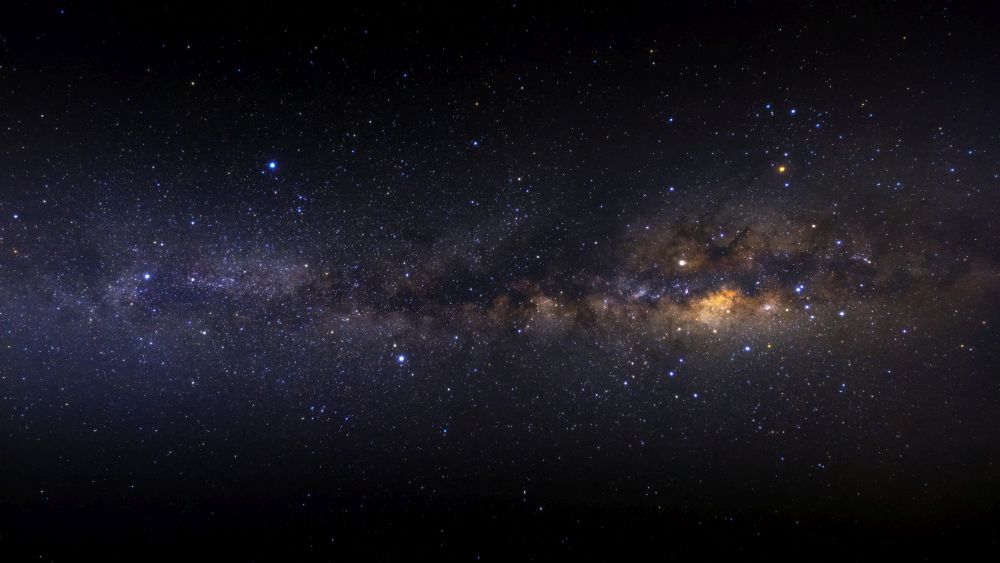
According to current research, up to 85 percent of the matter in the universe consists of dark matter. To determine what this invisible matter is made of and how it differs from its “ordinary” counterpart, astroparticle physics relies on observational data from various laboratory experiments – so far without success. The German Research Foundation (DFG) is now funding the research group “DELight – an experiment for the direct search for light dark matter using superfluid helium” at the Universities of Heidelberg and Freiburg as well as the Karlsruhe Institute of Technology (KIT), which is implementing a novel experimental approach.
Ultracold Helium as the Basis for a Novel Detector
“DELight focuses on particles with very low mass as candidates for dark matter,” explains Professor Kathrin Valerius from the Institute of Astroparticle Physics at KIT. To this end, the six research teams plan to make use of the properties of ultracold helium. “Due to the low mass of helium atoms, it is particularly well-suited for this direct search for new light particles,” says Professor Belina von Krosigk of Heidelberg University, spokesperson for the research group. The researchers are developing a new detector concept based on superconducting quantum sensors. A cryogenic platform is being built in Heidelberg for this purpose, designed to cool the helium to a few thousandths of a degree above absolute zero – that is, to about -273 degrees Celsius.
“To detect the very small amounts of energy from possible dark matter collisions in the helium, we are developing an innovative magnetic microcalorimeter at KIT that can detect even the smallest signals,” explains Professor Sebastian Kempf from the Institute for Micro- and Nanoelectronic Systems at KIT. At the University of Freiburg, researchers are using highly sensitive measuring instruments to identify ultra-pure materials for the experiment. To protect against cosmic radiation, the DELight experiment is being set up in an underground laboratory.
jho, April 2, 2026