
New Rare-Earth Compounds as Potential Data Storage Solutions of the Future
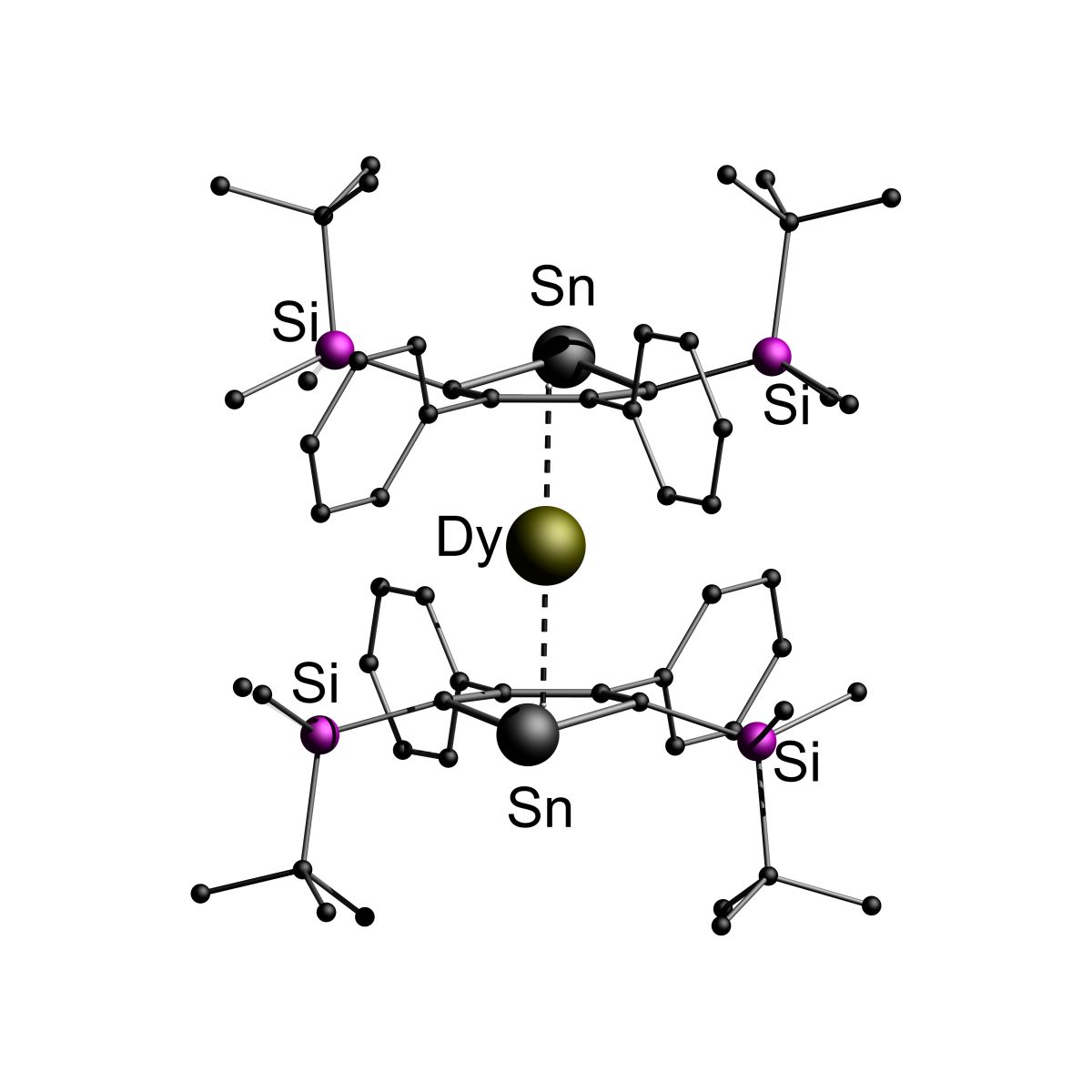
Researchers at the Karlsruhe Institute of Technology (KIT) have succeeded in synthesizing molecules with great potential for future applications in data storage and quantum information technology. They report on this new class of rare-earth compounds with specific magnetic properties in the journal Nature Chemistry.
The study focuses on so-called rare-earth sandwich complexes. These are molecules in which a rare-earth element is positioned between two ring-shaped hydrocarbon structures. These compounds belong to the group of single-molecule magnets, which behave like tiny magnets and are capable of maintaining their magnetic state stably over long periods.
Improved Properties Through Targeted Chemical Modification
“This property makes the compounds particularly interesting for use in high-density magnetic data storage,” explain Professor Peter Roesky from the Institute for Inorganic Chemistry and Professor Mario Ruben from the Institute of Nanotechnology at KIT. The molecules also offer promising prospects for quantum information technology.
To improve the magnetic properties, the research team replaced individual carbon atoms in compounds containing dysprosium and terbium with the heavier element tin. Through structural and magnetic analyses, as well as quantum chemical calculations, they were able to verify the properties of the new compounds. The research was conducted in collaboration with Saitama University in Japan.
sfo, April 16, 2026