
New Insights Into the Formation of the Alps
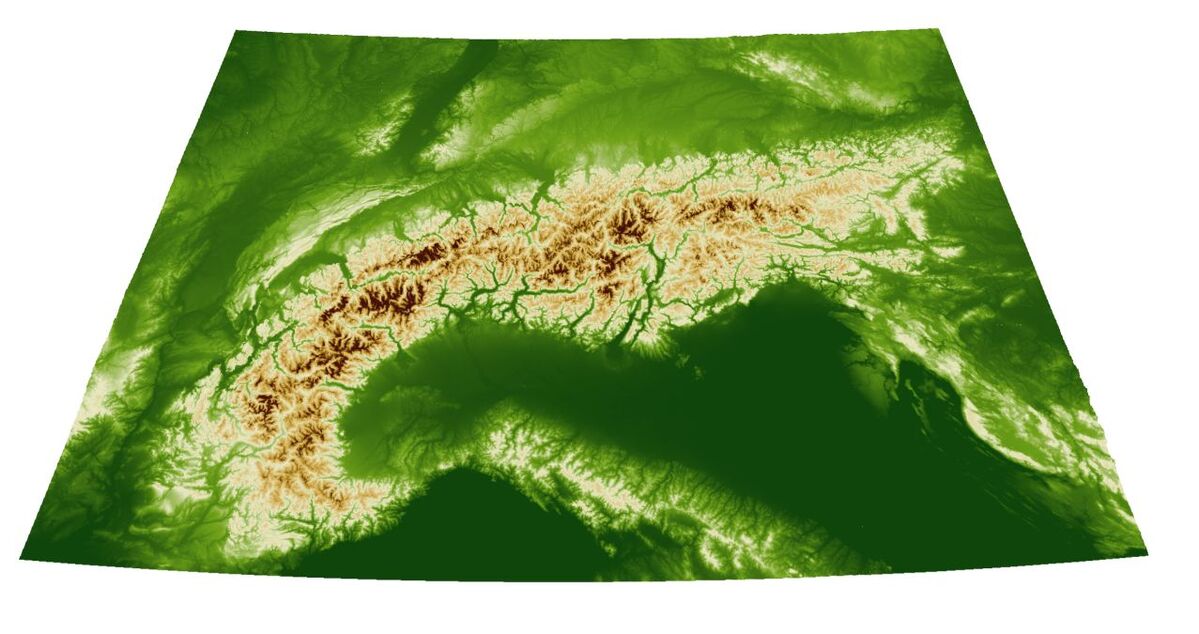
The formation of the Alps has fascinated and challenged scientists for centuries. The main cause of the mountain range’s development – the collision of two continental plates, one of which is subducted beneath the other while pushing it upward – is well established. Now, researchers at Karlsruhe Institute of Technology (KIT), together with partners from ETH Zurich, have gained new insights into how part of the subducting plate detached beneath the Alps and propagated laterally during the collision. In doing so, they were able to explain a previously unresolved discrepancy between numerical models and geological observations. The results have been published in Nature Communications.
Strength of the Continental Margin Influences Slab Tearing
“Until now, models have assumed that slab tearing propagates laterally very rapidly,” says Professor Nevena Andrić-Tomašević of the Institute of Applied Geosciences (AGW) at KIT. Such rapid propagation, however, would hardly have allowed for the formation of the longer-lasting signatures at Earth’s surface identified through geological observations.
Using three-dimensional geodynamic models, the researchers found that variations in the strength of the former continental margin of the subducting plate play a major role in determining where slab tearing begins, how quickly it propagates, and what signatures it leaves at the surface. “We were able to show that variations in the strength and structure of the former continental margin have a decisive influence on the rate and propagation of slab tearing,” Andrić-Tomašević says.
The model thus provides the first explanation for the slowed propagation of slab tearing and shows how the process shapes Earth’s surface. “Uplift and subsidence migrate with the propagating tear, altering depositional environments and leaving characteristic signatures in the landscape,” says first author Dr. Giridas Maiti of the AGW. “This allows us to connect geological observations at the surface with processes taking place deep within the Earth.”
mhe, August 20, 2026