
Iron as an Energy Carrier Could Save Billions
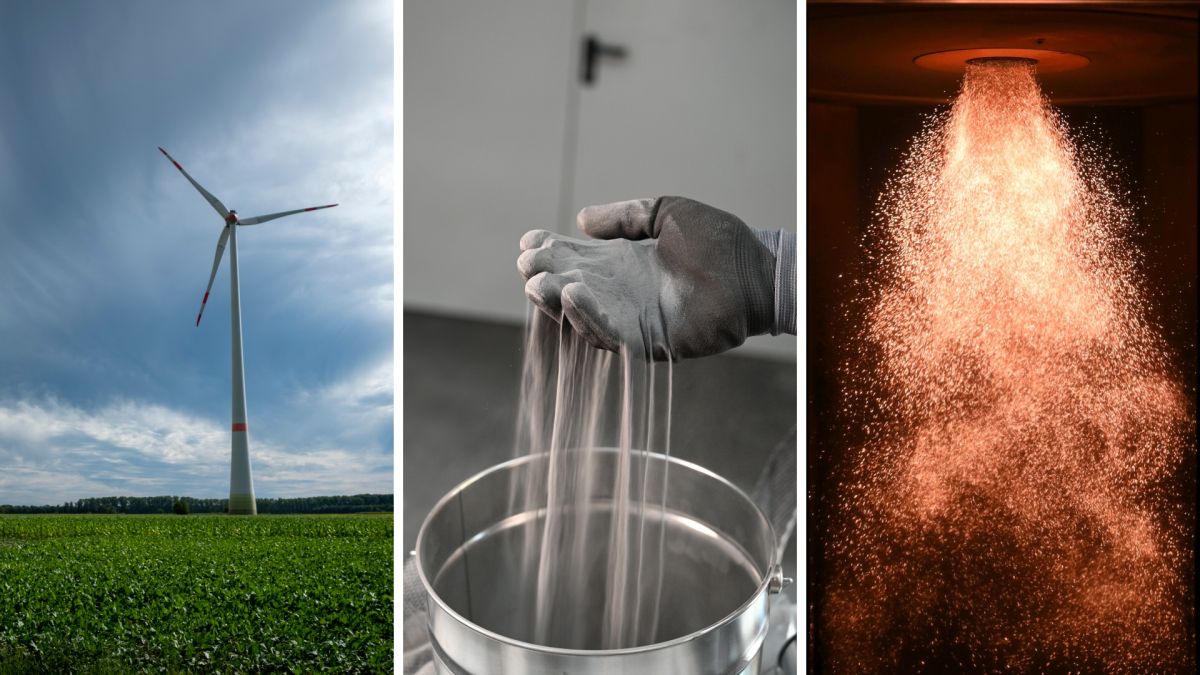
For a climate-neutral energy system, energy must be easy to store and transport over long distances. In addition to the much-discussed green hydrogen, an unusual candidate is also worth considering: iron. A report by the Institute of Energy Economics at the University of Cologne, commissioned by the DESERTEC Foundation and the Technical University of Darmstadt, with which researchers from Karlsruhe Institute of Technology (KIT) have been collaborating since 2021 as part of the Clean Circles project, now shows that iron could reduce the costs of the European energy system by up to €18 billion per year and lessen dependence on energy imports.
How Iron Stores Energy
Iron works well as an energy storage medium because, when in the form of a finely ground powder, it burns with oxygen without emitting the greenhouse gas CO₂. After combustion, only iron oxide remains. If this process is reversed and oxygen is removed from the iron oxide using hydrogen, reduced iron and water as a by-product are produced. If this step is carried out using green hydrogen, energy from the sun and wind is chemically stored in the iron powder, much like in a charged battery. The iron itself is not consumed but repeatedly cycles between its “charged” and “discharged” states.
“At KIT, we are working, among other things, on a better understanding and optimization of the combustion and reduction of iron particles,” says Professor Dimosthenis Trimis of KIT's Engler-Bunte Institute. The charged powder can be stored easily and transported by ship or rail. When needed, it can provide electricity and heat in power plants that, unlike wind and solar power generation, can be dispatched on demand. Existing power plants could thus also be given a second, green lease on life. “The report shows that iron does not replace green hydrogen; it complements it,” says Trimis. “Metals as energy carriers have enormous potential from an economic, energy-system, and strategic perspective.”
as, November 4, 2026